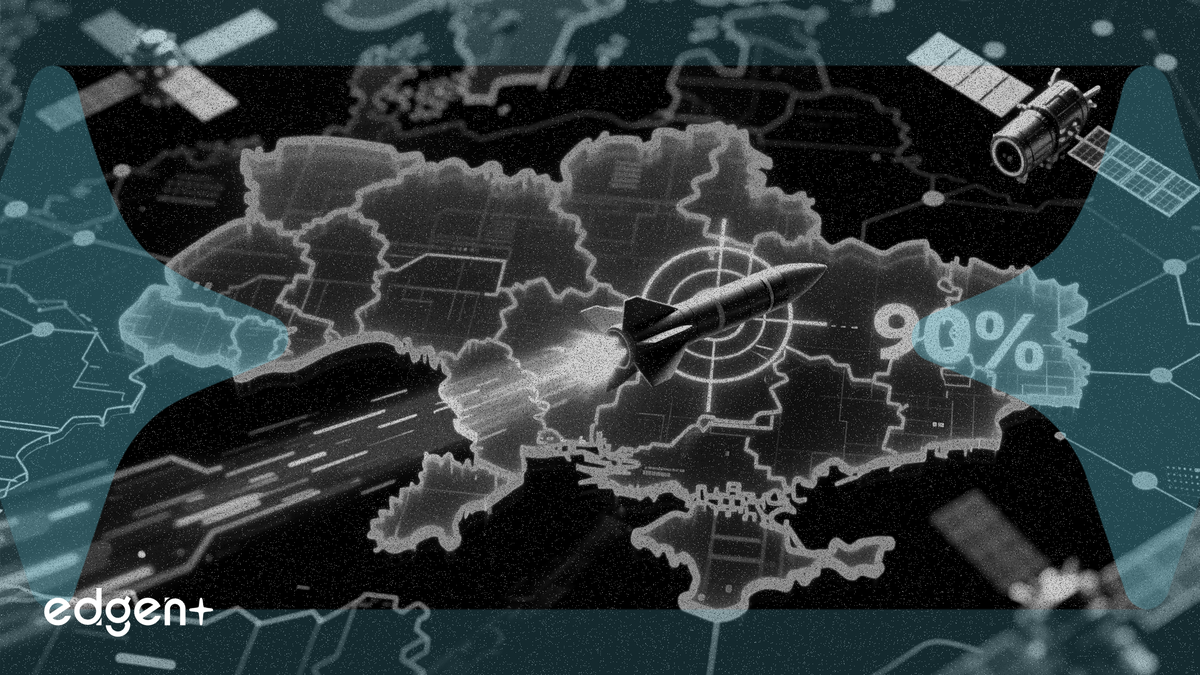
Ukrainian forces are using commercial satellite images delivered directly to soldiers' phones to guide drone strikes, compressing the time from target identification to attack by as much as 90%.
Ukrainian forces have begun using real-time commercial satellite imagery from Colorado-based Vantor directly on soldiers' mobile devices, shortening the sensor-to-shooter cycle by as much as 90% in a battlefield test over the past six months.
"Compressing the sensor-to-shooter cycle is the defining trend of this war at the tactical level," said Franz-Stefan Gady, a military analyst and founder of defense advisory firm Gady Consulting.
Vantor's 10 satellites cover 7 million square kilometers of Earth daily, revisiting any point 12 to 15 times per day, with coordinates accurate to within 5 meters — sufficient for a 50-kilogram explosive payload, according to users. The images bypass centralized review in Kyiv and reach soldiers in as little as 15 minutes, compared with the hours or days previously required for intelligence to flow to the front line.
The technology marks the first known instance of unclassified commercial satellite imagery going directly to a soldier for real-time battle decisions, according to the companies and military analysts involved. Vantor, which is owned by private equity, reached $900 million in annual recurring revenue last year and added more than 10 European defense and intelligence customers, signaling growing demand for real-time geospatial intelligence in modern warfare.
During a springtime mission called Starfall II, a Ukrainian unit spent 2½ weeks destroying billions of dollars in Russian assets, according to members of the team. In one operation, Brigade 422 identified a Russian ammunition depot in occupied Ukraine by comparing a current satellite image with historical photos from before the invasion, spotting fresh tire tracks consistent with military vehicles unloading ammunition. The unit then dispatched attack drones.
"Every ammunition depot you destroy is at least a couple of Ukrainian soldiers' lives you save," said one member of the operation, a technical adviser assisting the armed forces.
The technology is a trans-Atlantic collaboration between Vantor, Dutch geospatial intelligence company Bravo1Alpha, US-based Persistent Systems and Ukrainian defense firm Burevii. The satellite sensors can detect armored vehicles hidden under tree cover that reconnaissance drones cannot see, as demonstrated in a strike on a Russian planning site where thick spring foliage obscured the building's outline.
From Orbit to Battlefield
The US military is moving in a similar direction. US Special Operations Command last year added software to provide near-real-time commercial satellite images on soldiers' mobile devices, a Socom spokeswoman said. The US Army does not yet send satellite intelligence directly to soldiers' devices but is working toward it through a broader effort to create a high-speed information system that gives soldiers of all ranks access to satellite data "free from headquarters reviews," Army spokesman Maj. Sean Minton said.
Removing intermediaries responsible for vetting intelligence speeds operations but raises risks, said Nand Mulchandani, former chief technology officer for the Central Intelligence Agency and the Defense Department's artificial intelligence office. "There are processes in place that slow things down, but there are processes in place for a reason," Mulchandani said.
Satellite imagery has limitations: it is less effective under thick cloud cover, which is common during Ukrainian winters, and cannot loiter over moving targets. Still, the Ukrainian deployment is previewing for Western militaries what is possible when the intelligence chain is compressed, analysts said. The last major compression of battlefield intelligence — the shift from centralized satellite analysis to drone-fed video feeds — reshaped tactical operations across multiple conflicts over the past decade.
This article is for informational purposes only and does not constitute investment advice.