Wholesale costs accelerated in August as gasoline prices climbed, delivering the first of two inflation readings that will decide whether the Federal Reserve raises interest rates on Sept. 16 for the first time since 2023. Producer prices rose on the month after a softer July, with energy doing the work.
"The Fed is on a knife's edge about whether or not to go at next week's meeting," said Christopher Hodge, chief US economist at Natixis. "Now that we've been over target inflation for 65 consecutive months, I think the Fed's sort of like, 'Enough is enough. We have to put our foot down at some point.'"
The August producer price index is the opening act. Economists surveyed by FactSet expect Friday's consumer price index to rise 0.4% on the month, up from 0.1% in July and the fastest monthly pace in three months, while the annual rate eases to 3.3% from 3.4%. Core CPI, which strips out food and energy, is forecast to rise 0.2% on the month and 2.4% from a year earlier, down from 2.5%. The split matters: headline reaccelerates on energy, core keeps grinding lower.
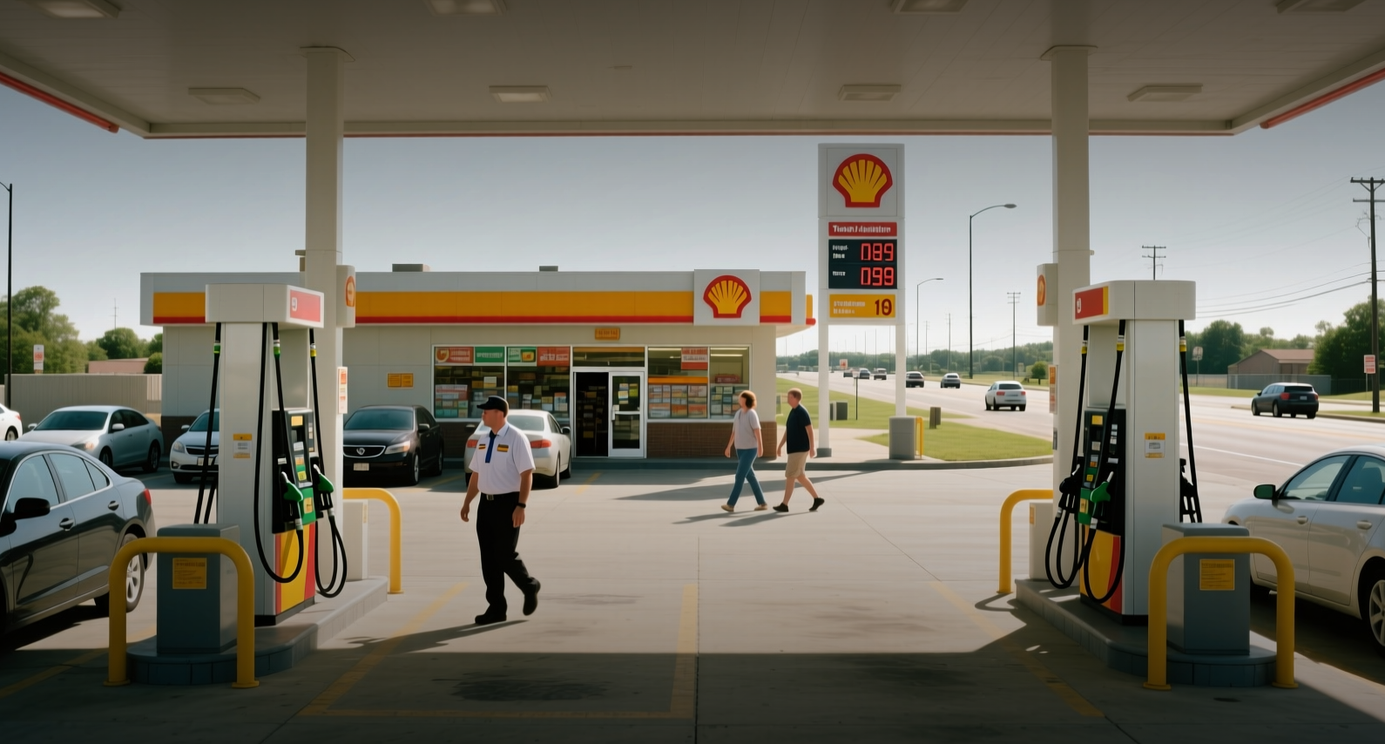
Gasoline is the reason. West Texas Intermediate crude ended August about 1% higher at $85.76 a barrel as renewed fighting in the Iran war disrupted shipments out of the Persian Gulf and the Red Sea, according to Morningstar. Futures dipped early in the month when Washington touted progress in peace talks; those talks stalled and skirmishes resumed. Pump prices briefly fell in mid-August before rebounding to finish the month unchanged, AAA data show. "The strength in headline CPI reflects higher energy prices in August following two consecutive months of declines," Halim Abourachid, US economist at Vanguard, wrote in a note Tuesday.
The oil impulse is not staying in the energy line. Higher jet fuel costs drove a more than 2% rise in airfares in July, and Vanguard expects a roughly equal increase for August; Goldman Sachs economists forecast airfare inflation accelerated to 4% last month. That is the transmission channel that worries the committee — a geopolitical supply shock leaking into core services, the stickiest part of the index.
Shelter, which with owners' equivalent rent accounts for more than 40% of the core basket, is running the other way. Goldman expects owners' equivalent rent and rent of primary residence to decelerate from 0.26% each in July to 0.22% and 0.23%. Natixis' Hodge calls shelter prices "fairly subdued." A separate pressure is building in goods: the AI data center buildout is lifting memory and data storage prices, and personal computers accounted for about a quarter of July's 0.2% rise in core goods. Vanguard predicts core goods prices rose 0.15% in August "amid signs of broadening AI-related inflation beyond computer software and accessories."
Rate odds have round-tripped from 44% to 60%
Traders put a 60% probability on a quarter-point increase next Wednesday, according to CME FedWatch data cited by Morningstar — down from 63% a week ago but up sharply from 44% a month ago. The federal funds rate has sat in a 3.50%-3.75% range since December. A hike would be the first since 2023 and would reverse the easing cycle that began under the prior Fed leadership.
The last time the FOMC moved with inflation this far above target and a labor market this firm was in 2023, when it delivered a final quarter-point increase in July of that year and then held for 14 months. Two-year Treasury yields rose roughly 30 basis points over the six weeks surrounding that decision as traders abandoned cut expectations. Positioning today is less one-sided, which is why the odds have swung 16 points in a month rather than repricing in a straight line.
Officials have not made the decision easier. Chair Kevin Warsh "struck a decidedly hawkish tone and appeared to lower the threshold for another rate increase" at Jackson Hole last month, Bank of America US economist Stephen Juneau wrote, while New York Fed President John Williams and Governor Christopher Waller have been "relatively more dovish" in recent remarks. Juneau expects "the data to be firm enough for the FOMC to follow through with a hike."
Vanguard's Josh Hirt disagrees. "We expect the Fed to hold next week," he said, "but we think there's very little room for error in either of the inflation reports." Hirt estimates the PPI and CPI prints will imply core PCE, the Fed's preferred gauge, rose 0.24% in August — a level he believes the committee can tolerate.
What Friday decides
The arithmetic is narrow. A core CPI print at or below 0.2% keeps the hold case alive and likely drags September hike odds back toward 50%; a 0.3% or hotter core reading, layered on an energy-driven headline, would push odds through 70% and lock in a hike, with the next policy meeting not until late October. The dollar and two-year yields are the cleanest expressions of that binary — both rallied into the August jobs report and both have given back part of the move as the odds drifted lower this week.
For equities, the sensitivity is concentrated in rate-dependent sectors. The S&P 500 and Dow futures attempted a recovery Wednesday ahead of the inflation report, but a hike would raise the discount rate applied to long-duration growth names while pressuring regional banks' funding costs and commercial real estate refinancing math. Energy producers are the offset: WTI at $85.76 supports cash flow for the integrated majors and shale operators even as it feeds the inflation the Fed is trying to kill.
The second report lands Friday at 8:30 a.m. ET. The Fed announces its verdict Wednesday afternoon.
This article is for informational purposes only and does not constitute investment advice.