
A prominent Wall Street Journal opinion piece argues for a significant military escalation against Iran, including the use of ground forces, to break a stalemate that has pushed global oil prices to $150 a barrel.
A prominent Wall Street Journal opinion piece argues for a significant military escalation against Iran, including the use of ground forces, to break a stalemate that has pushed global oil prices to $150 a barrel.
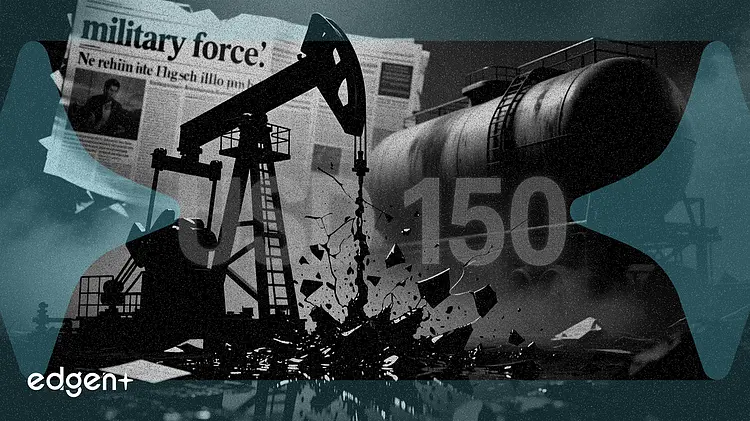
A May 18 opinion piece in the Wall Street Journal argues that the U.S. must commit to a full-scale military confrontation to collapse the Iranian state and reopen the Strait of Hormuz, as a naval blockade has pushed global oil prices toward $150 a barrel. The author contends that the current strategy of economic pressure is insufficient and risks severe global economic damage if the crisis is prolonged.
"President Trump has a narrow window in which to end this crisis favorably, reopen the Strait of Hormuz, and ensure an economic rebound while securing American interests and prestige," Seth Cropsey, president of the Yorktown Institute and a former naval officer, wrote in the Journal. "But that requires deploying the full spectrum of American power."
The call for escalation follows a month-long U.S. blockade on Iranian oil capacity that began after negotiations broke down in early April. According to the author, this disruption to the roughly one-fifth of global fuel exports that transit the strait has had a direct effect on global prices and related industries. The piece details a proposed multistage operation that includes major strikes on Iranian infrastructure, coordinating with the Israeli air force, and using ground troops to seize key islands in the Strait of Hormuz.
Defeating Iran is paramount to restoring the credibility of American deterrence, the safety of sea lanes, and the normalcy of global energy markets, Cropsey argues. "The president should finish what he rightly started," he concludes, framing the conflict as a necessary action that must now be seen through to a decisive and overwhelming conclusion.
The core of the argument stems from the severe economic fallout of the ongoing conflict, which the author states began in late February. The U.S. has imposed a blockade preventing Iranian tankers from accessing the Strait of Hormuz, effectively halting the country's primary export. While some fuel transits through clandestine tankers and pipelines, the disruption has been severe enough to drive oil to approximately $150 a barrel.
According to the op-ed, this price level threatens to accelerate global inflation and derail key supply chains if sustained. The author suggests that had the U.S. immediately coupled its blockade with a "furious air campaign" in late February, the conflict might already be resolved. Instead, a pause for what he deems failed negotiations allowed the economic pressure to mount to a critical level for the global economy.
Mr. Cropsey outlines a detailed and aggressive plan to "break the Iranian state economically and politically." The proposal is not a bluff, but a committed military operation.
The first step involves a series of major strikes against Iranian communications, transportation, and other critical infrastructure, paired with Israeli air force attacks on the country's remaining industries. This would be followed by two key operations: one to seize control of Qeshm Island, the key to the Strait of Hormuz, in concert with the UAE; and another to seize Iranian uranium storage in Isfahan. Finally, the plan calls for attacking Iran's remaining tanker capacity within the strait to maximize economic pressure. The author asserts that this overwhelming force is necessary to avoid a protracted crisis that would be more damaging to U.S. interests and the global economy.
This article is for informational purposes only and does not constitute investment advice.
