No Data Yet

## Executive Summary The Australian Securities Exchange (**ASX**) experienced a significant operational failure on Monday as its company announcements platform suffered a prolonged outage. The technical disruption prevented approximately 80 listed companies from publishing investor updates, including market-sensitive information, for several hours. This event is the latest in a series of technical mishaps that have placed the exchange operator under intense scrutiny from regulators and fueled calls for greater competition in Australia's market infrastructure. ## The Event in Detail The disruption began before the market opened on Monday, with the exchange's platform ceasing to publish new company statements after 8:59 a.m. Sydney time. According to reports, the outage blocked the dissemination of crucial information to the market, creating uncertainty and what some market participants described as "chaos and investor angst." While trading on the main board was not halted, the inability for companies to communicate with investors represents a significant breach of market transparency and integrity. ## Market Implications The primary implication of the outage is the creation of information asymmetry, where some market participants may possess non-public information that could not be disseminated to the broader market. This undermines the principle of a fair and orderly market. For growth companies, particularly those with high insider ownership that rely on strong investor confidence, the inability to provide timely updates can be especially damaging. Without a reliable flow of information, investors may become hesitant, potentially impacting liquidity and valuations. ## Regulatory Scrutiny and Governance This incident has intensified existing concerns from Australian financial regulators. The Reserve Bank of Australia (**RBA**) has recently criticized **ASX's** governance, culture, and risk-management practices, particularly following a settlement-system malfunction in December 2024. This latest failure adds considerable weight to regulatory concerns about **ASX's** capacity to deliver and maintain secure and resilient market infrastructure. The pattern of technical failures has also led to increasing calls from market participants for the introduction of a competitor to the **ASX** to mitigate systemic risk. ## Broader Context The outage is more than a one-off technical glitch; it highlights a recurring issue with **ASX's** critical market infrastructure. In a previous incident, all trading was disrupted due to a software issue attributed to its technology partner, **Nasdaq**. These repeated failures raise questions about the long-term reliability of the exchange and its governance. For a developed economy like Australia, the stability of its core financial market infrastructure is paramount. The ongoing operational issues at the **ASX** present a reputational risk to the exchange and a systemic risk to the Australian financial market, directly challenging the transparent information flow necessary for maintaining investor confidence.

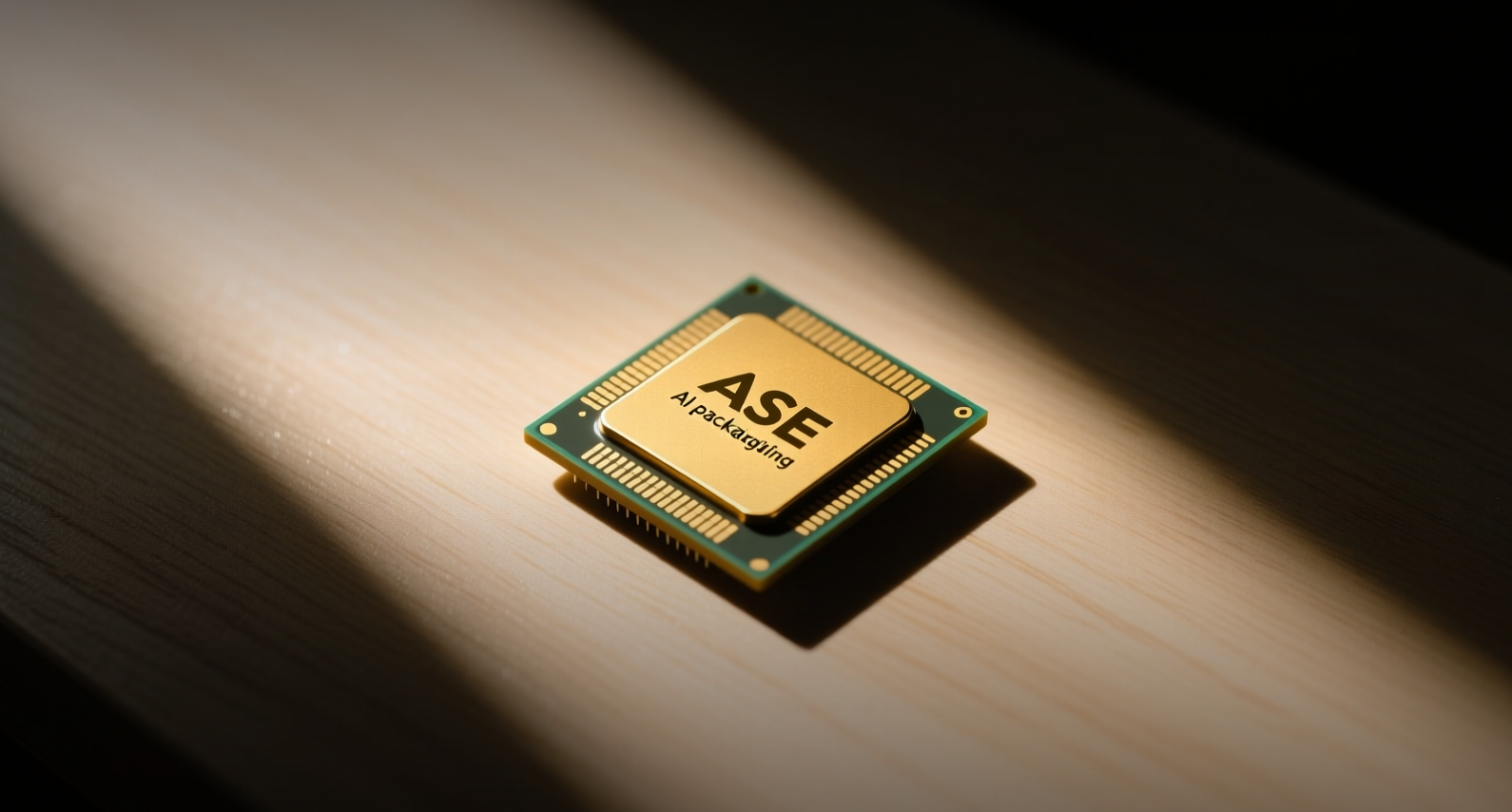
## Technology Sector Innovator ASE Unveils IDE 2.0 Platform **Advanced Semiconductor Engineering, Inc.** (**ASE**), a key member of **ASE Technology Holding Co., Ltd.** (NYSE: **ASX**, TAIEX: 3711), has announced the launch of IDE 2.0. This significant upgrade to its Integrated Design Ecosystem™ (IDE) platform introduces substantial enhancements through the integration of artificial intelligence (**AI**), targeting a more rapid and accurate development cycle for advanced semiconductor packaging. ## Detailing the Enhanced Integrated Design Ecosystem 2.0 IDE 2.0 is engineered to accelerate design iterations and optimize **chip-package interaction (CPI)** analysis, crucial for the increasing complexity of modern computing. The platform is specifically tailored to shorten the time-to-market for demanding **AI** and **high-performance computing (HPC)** applications. Central to IDE 2.0's capabilities is its use of **AI** engines for transformative advanced package co-design. Through a new cloud-based e-Simulator, it conducts **CPI** predictive risk assessments and refines design, analysis, and manufacturing data. Key performance indicators underscore the platform's efficiency gains. Simulation acceleration, for instance, reduces design iteration time by over 90%, transforming processes that traditionally took 14 days into approximately 30 minutes, within defined design parameters. Furthermore, the platform incorporates integrated multiphysics simulations, which bolster accuracy across critical domains including electrical, thermal, warpage/stress, and reliability. An **AI**-based risk prediction feature generates predictive assessments within 60 seconds, facilitating real-time design optimization. This streamlined workflow dramatically reduces the overall design-analysis cycle time from weeks to mere hours. ## Market Response and Context The introduction of IDE 2.0 signals **ASE**'s strategic move to solidify its position in the rapidly evolving semiconductor landscape, particularly in areas driven by **AI** and **HPC**. On the market, **ASE Technology Holding Co., Ltd.** (**ASX**) recently demonstrated upward momentum, reaching a new 52-week high of $13.30. The stock closed at $13.15, with a trading volume of 170,878 shares. However, this positive movement comes with a nuanced analytical perspective. Despite the stock's recent gains, some investment analysts, including **Weiss Ratings**, have maintained a "Hold" rating on **ASX** shares. This cautious outlook is partly influenced by the company's recent quarterly earnings report, where it posted $0.11 earnings per share (EPS), missing analysts' consensus estimates of $0.14. The company reported revenue of $5.07 billion for the quarter. The broader context reveals a significant industry trend: the pervasive integration of **AI** and predictive analytics across various sectors, including finance and technology. The global **AI** in finance market alone is projected to expand to $17 billion by 2025, reflecting a compound annual growth rate (CAGR) of 25.9%. **ASE**'s investment in **AI**-driven design platforms like IDE 2.0 aligns with this overarching trend, aiming to harness **AI** for enhanced operational efficiency, cost reduction, and accelerated product development within the critical semiconductor manufacturing domain. ## Expert Perspective Dr. C.P. Hung, Vice President of Corporate Research & Development at **ASE**, highlighted the transformative impact of the new platform: > "IDE 2.0 delivers precise insights into chip-package interaction and residual stress by integrating characterized material and simulation databases with AI-driven capabilities, enabling customers to rapidly model, customize, and optimize designs, reducing prototypes, costs, and time-to-market while protecting IP." This commentary underscores the strategic importance of IDE 2.0 in providing a competitive edge through improved design accuracy and efficiency. ## Future Outlook for Semiconductor Innovation The launch of IDE 2.0 positions **ASE** to address the escalating demands for advanced semiconductor packaging, particularly from sectors heavily reliant on **AI** and **HPC**. The platform's focus on fostering faster innovation and enabling real-time design optimization is critical in an industry characterized by rapid technological cycles. As **AI** continues to mature and integrate deeper into industrial processes, continued advancements in semiconductor design and manufacturing, spearheaded by tools like IDE 2.0, will be pivotal. Investors and industry observers will closely monitor **ASX**'s ability to leverage these technological advancements into sustained financial performance and expand its market presence. The success of IDE 2.0 will likely be measured by its adoption rate among customers, its contribution to cost efficiencies, and its role in bringing cutting-edge **AI** and **HPC** solutions to market more quickly, ultimately influencing **ASE**'s trajectory within the global semiconductor supply chain.