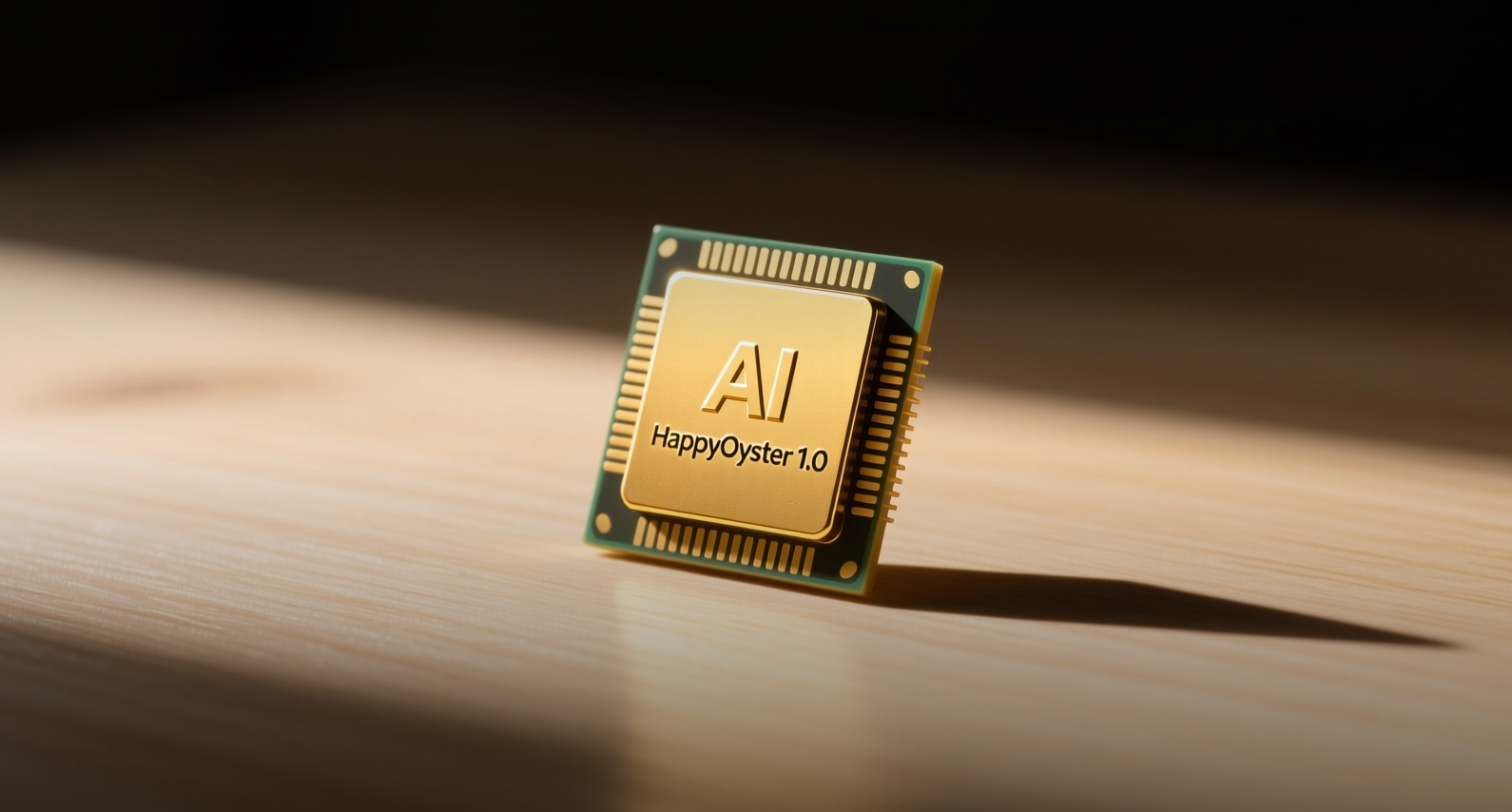
Alibaba Cloud's new world model lets users generate interactive 3D environments from a single sentence or image, targeting gaming and enterprise simulation markets.
Alibaba Cloud launched HappyOyster 1.0, an open world model that generates interactive AI environments from text or images, entering a global race to build immersive digital worlds beyond text and image generation.
"World models represent the next frontier in generative AI because they create persistent, interactive environments rather than static outputs," Arthur Guo, research manager at IDC China, said. "This opens new use cases in gaming, simulation, training and education that text-to-image models cannot address."
HappyOyster 1.0 offers two modes: World Exploration, which lets users navigate AI-generated environments, and Real-time Directing, which enables dynamic scene manipulation. Users input a sentence or image to generate the world. The product is available in gray-scale testing on Alibaba Cloud Bailian with SDK support for Android, iOS and Web platforms. Alibaba did not disclose pricing, parameter count or benchmark performance for the model.
The launch strengthens Alibaba Group's AI portfolio as it competes with Tencent, Baidu and ByteDance in China's generative AI market. Alibaba Cloud, the country's leading cloud provider with about 34% market share, has invested more than $5 billion in AI infrastructure over the past year, according to public filings, to drive enterprise adoption and cloud revenue growth.
World models represent a technical step beyond text-to-image and text-to-video generation. Where OpenAI's Sora generates video clips from text prompts, HappyOyster 1.0 creates environments that users can navigate and modify in real time — a distinction that matters for applications such as architectural visualization, virtual training simulations and game prototyping. Google's Genie, announced in early 2025, generates interactive 2D worlds from images but has remained a research project. Meta has published world model research but has not released a commercial product.
Alibaba's push into world models builds on its Qwen large language model family, which powers Apple Intelligence in China through a partnership with Apple. The company offers AI services through its Bailian platform to enterprise customers, and the HappyOyster launch extends that platform's capabilities into spatial computing and interactive AI. The Bailian platform has hosted more than 100 open-source models and serves thousands of enterprise clients, according to Alibaba.
The gray-scale testing phase suggests Alibaba is prioritizing developer feedback before a wider commercial rollout. The three-platform SDK targets mobile-first markets where China has more than 1 billion smartphone users, according to industry data. ByteDance, which operates Doubao — one of China's most popular AI assistants with employees burning through billions of AI tokens monthly — has not announced a comparable world model product. ZTE, meanwhile, has partnered with ByteDance to integrate Doubao into its NaviX Ultra smartphone, priced at 3,499 yuan ($516).
Alibaba Group trades at about 10x forward earnings, a discount to US peers such as Microsoft at 30x and Amazon at 35x, as the market prices in regulatory and competitive risks in China. A successful AI product cycle that drives enterprise cloud adoption could narrow that valuation gap. IDC's Guo said more than half of China's smartphone market could be dominated by AI-capable devices in 2026, suggesting growing demand for AI services that world models could address. For now, HappyOyster 1.0 remains in testing with no timeline for commercial launch or disclosed pricing.
This article is for informational purposes only and does not constitute investment advice.