

Key Takeaways: CKH Holdings will hold firm on its $22.8 billion global port portfolio sale despite losing two Panama facilities to government seizure.
Key Takeaways: CKH Holdings will hold firm on its $22.8 billion global port portfolio sale despite losing two Panama facilities to government seizure.
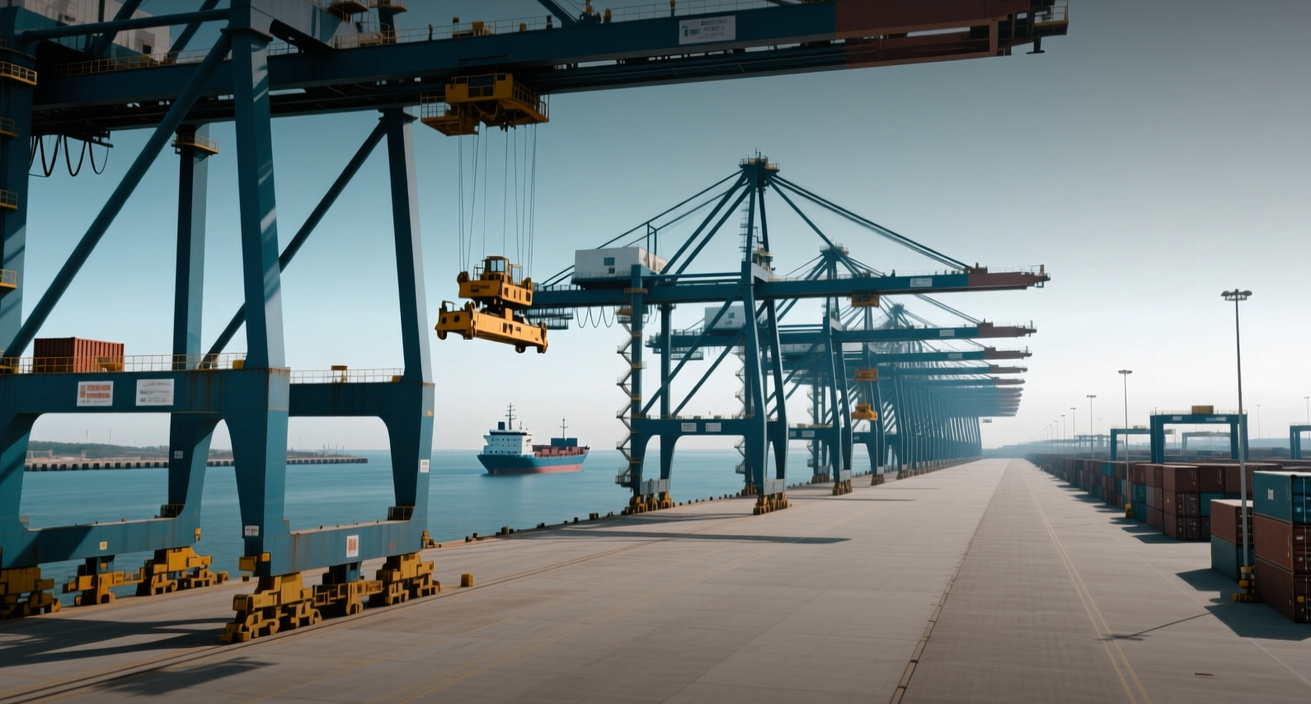
CKH Holdings will sell its global port portfolio at the original $22.8 billion valuation despite losing control of two Panama ports, Bloomberg reported, citing people familiar with the matter.
The expected cash proceeds of more than $19 billion remain unchanged even after excluding the Panama facilities from the 43-port portfolio, the people said. Negotiations are ongoing, and final pricing could still shift given the deal's complexity.
The Panama facilities accounted for roughly 4 percent of the portfolio's original valuation. Appreciation across the remaining 41 ports is expected to offset the loss. CKH Holdings and its subsidiaries have initiated international arbitration against the Panamanian government, seeking at least $3.5 billion in compensation. Any award from those proceedings would be shared between CKH and the buyer consortium, which includes BlackRock Inc.
Completion of the sale would inject more than $19 billion in cash into CKH Holdings' balance sheet, one of the largest liquidity events for the Hong Kong conglomerate in years. Market participants are watching the September meeting between Chinese President Xi Jinping and US President Donald Trump as a potential breakthrough point for the transaction.
The deal was first announced in March 2025, when the buyer consortium — led by BlackRock — agreed to acquire CKH's global port network. The Panama ports' seizure triggered the arbitration claim, which CKH filed against the Panamanian government. The $3.5 billion minimum compensation sought reflects the strategic value of the two canal-adjacent facilities, which sit at one of the world's most critical maritime chokepoints.
The compensation-sharing arrangement between CKH and the buyers suggests both parties expect the arbitration to yield a meaningful recovery. The Panama assets' relatively small share of the overall portfolio valuation — about 4 percent — helps explain why the deal's headline price has held. CLSA analysts have said the market reaction to the arbitration filing is expected to be positive, viewing it as a defensive move that protects shareholder value.
The arbitration itself adds a layer of legal complexity to an already intricate transaction. CKH's claim against the Panamanian government is being pursued through international arbitration channels, a process that could take years to resolve. The sharing arrangement means both CKH and the buyer consortium have aligned incentives to pursue the claim aggressively. For the buyers, the potential compensation recovery effectively lowers the net acquisition cost of the remaining port portfolio.
For CKH Holdings, the sale represents a strategic pivot toward cash generation and portfolio simplification. The more than $19 billion in expected proceeds would give the conglomerate substantial firepower for debt reduction or new investments. The stock traded up 0.996 percent on the day, with short selling at $124.35 million, representing 19.951 percent of turnover, according to AASTOCKS data.
The transaction's completion hinges on several factors: ongoing negotiations over final pricing, the outcome of the Panama arbitration, and the geopolitical backdrop. The Xi-Trump meeting in September could provide the political cover needed to close the deal. If the meeting fails to produce progress, the timeline could slip further into 2026.
For BlackRock, the acquisition would mark one of its largest infrastructure investments to date, giving the asset manager a controlling stake in a global network of ports spanning multiple continents. The deal highlights growing institutional appetite for hard infrastructure assets, which offer long-duration cash flows and inflation-linked revenue characteristics. BlackRock's move reflects a broader trend of large asset managers entering physical infrastructure, competing with sovereign wealth funds and pension funds for strategic assets.
This article is for informational purposes only and does not constitute investment advice.
