
China's record trade surplus is pushing policymakers toward a currency accord that could reshape global trade.
China's record trade surplus is pushing policymakers toward a currency accord that could reshape global trade.
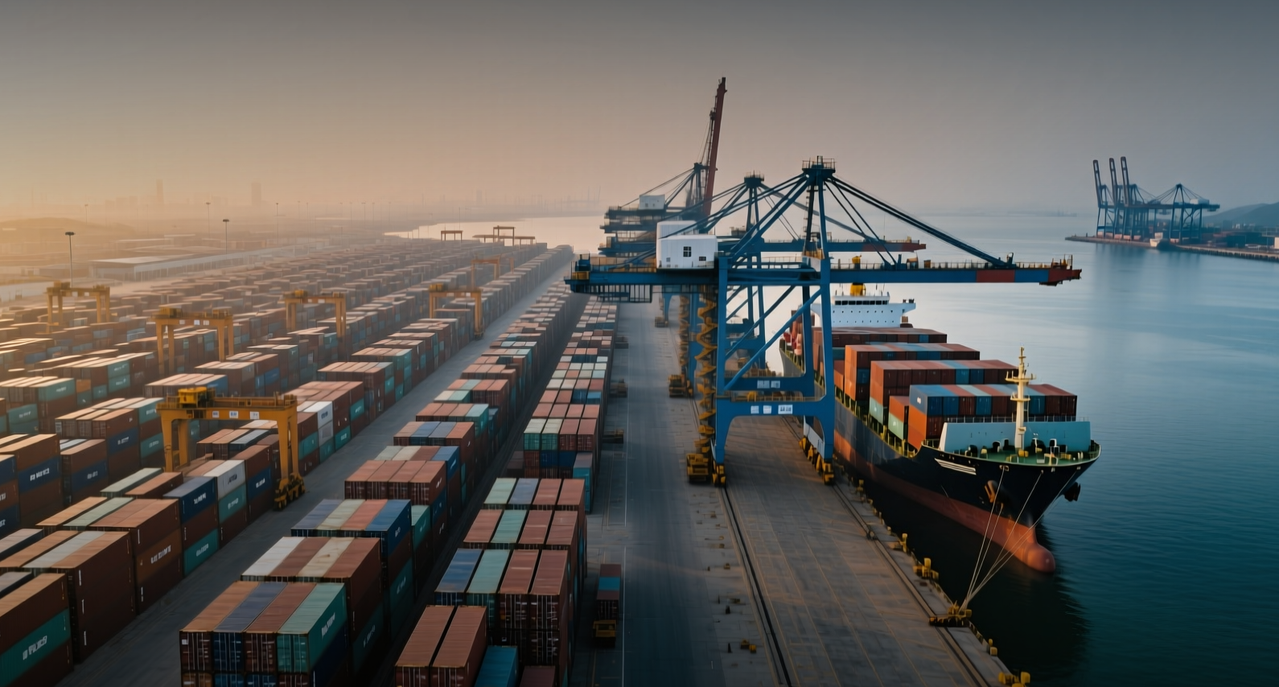
China's trade surplus hit a record near $1.2 trillion last year as cheap exports flooded global markets, prompting policymakers to consider an international accord to revalue the yuan as the only viable remedy.
"The scale of China's export machine has outgrown the tools available to individual trading partners," said Greg Ip, chief economics commentator at The Wall Street Journal, who outlined the revaluation scenario in an Aug. 28 column.
The surplus reflects massive overcapacity across Chinese industries from autos to solar panels, cement and steel. Beijing's own leaders have prioritized rebalancing the economy, but slowing domestic demand has pushed companies to expand overseas. Washington is weighing a 7.5 percent Section 301 tariff on Chinese goods — on top of the 10 percent to 12.5 percent duties already applied to 60 economies over forced-labor concerns.
A yuan revaluation would raise the price of Chinese exports globally, easing pressure on manufacturers from Detroit to Düsseldorf. But it carries risks: a stronger currency could slow China's already-soft domestic demand, and Beijing has historically resisted external pressure on its exchange-rate policy.
The overcapacity problem in numbers
China's Ministry of Commerce pushed back against claims of excess capacity in a report titled "China's Position on the So-called Excess Capacity Issue," arguing the country has never sought a large trade surplus. Yet the data tells a different story. Surging exports pushed the surplus to nearly $1.2 trillion last year, according to customs data. The U.S. Supreme Court in February struck down Trump's sweeping reciprocal tariffs, forcing the administration to pursue narrower Section 301 investigations targeting excess industrial capacity and forced-labor practices.
The administration announced in March it was launching formal probes into China and other economies including the European Union, Singapore, Switzerland, Norway, Indonesia, Malaysia, Cambodia, Thailand, South Korea, Vietnam, Taiwan, Bangladesh, Mexico, Japan and India. The 7.5 percent tariff under consideration would come on top of the 10 percent to 12.5 percent duties already imposed on 60 economies for failing to enforce bans on forced-labor goods.
What a yuan revaluation would mean
A coordinated revaluation would mark a departure from the market-driven approach Beijing has favored since 2015, when the People's Bank of China abandoned its managed peg. The last time the yuan appreciated sharply was 2005-2008, when China allowed the currency to rise roughly 21 percent against the dollar under U.S. pressure. That episode preceded a surge in Chinese outbound investment and a rebalancing of the economy toward domestic consumption.
The stakes extend beyond the U.S.-China bilateral relationship. India's central bank noted in its August bulletin that India is likely to be less affected than China, Vietnam and Thailand by U.S. tariffs, since smartphones, petroleum products and pharmaceuticals remain outside the additional duties. A yuan revaluation would shift competitive dynamics across Asia, potentially benefiting exporters in Vietnam, South Korea and Japan while pressuring Chinese manufacturers already facing thin margins.
The White House has not confirmed the 7.5 percent tariff, and people familiar with the deliberations said Trump could still change his mind. The administration is also weighing secondary sanctions on countries doing business with Iran, which could further complicate the trade picture. Treasury Secretary Scott Bessent's announcement Monday provided little detail and did not name which countries could face secondary sanctions, though China is Iran's biggest trade partner. For global investors, a yuan revaluation would ripple through U.S. Treasuries, emerging-market equities and commodity prices, as a stronger Chinese currency would raise the dollar cost of Chinese goods and potentially ease deflationary pressure that cheap exports have exerted on global prices.
This article is for informational purposes only and does not constitute investment advice.
