
Direct fire on US Navy vessels drew American retaliation against three Iranian crude carriers, tightening the oil risk premium as Hormuz traffic collapses.
Direct fire on US Navy vessels drew American retaliation against three Iranian crude carriers, tightening the oil risk premium as Hormuz traffic collapses.
The seven-month confrontation between Washington and Tehran crossed a new threshold Saturday when Iran's Revolutionary Guard launched ballistic missiles at a US aircraft carrier and destroyer, the first direct attack on American warships in the conflict, leaving Brent near $96 a barrel as traders priced a widening war.
"Let the message to the IRGC be clear: If you shoot at two of our ships, we will impose an even higher economic cost — taking out three of yours," Adm. Brad Cooper, commander of US Central Command, said.
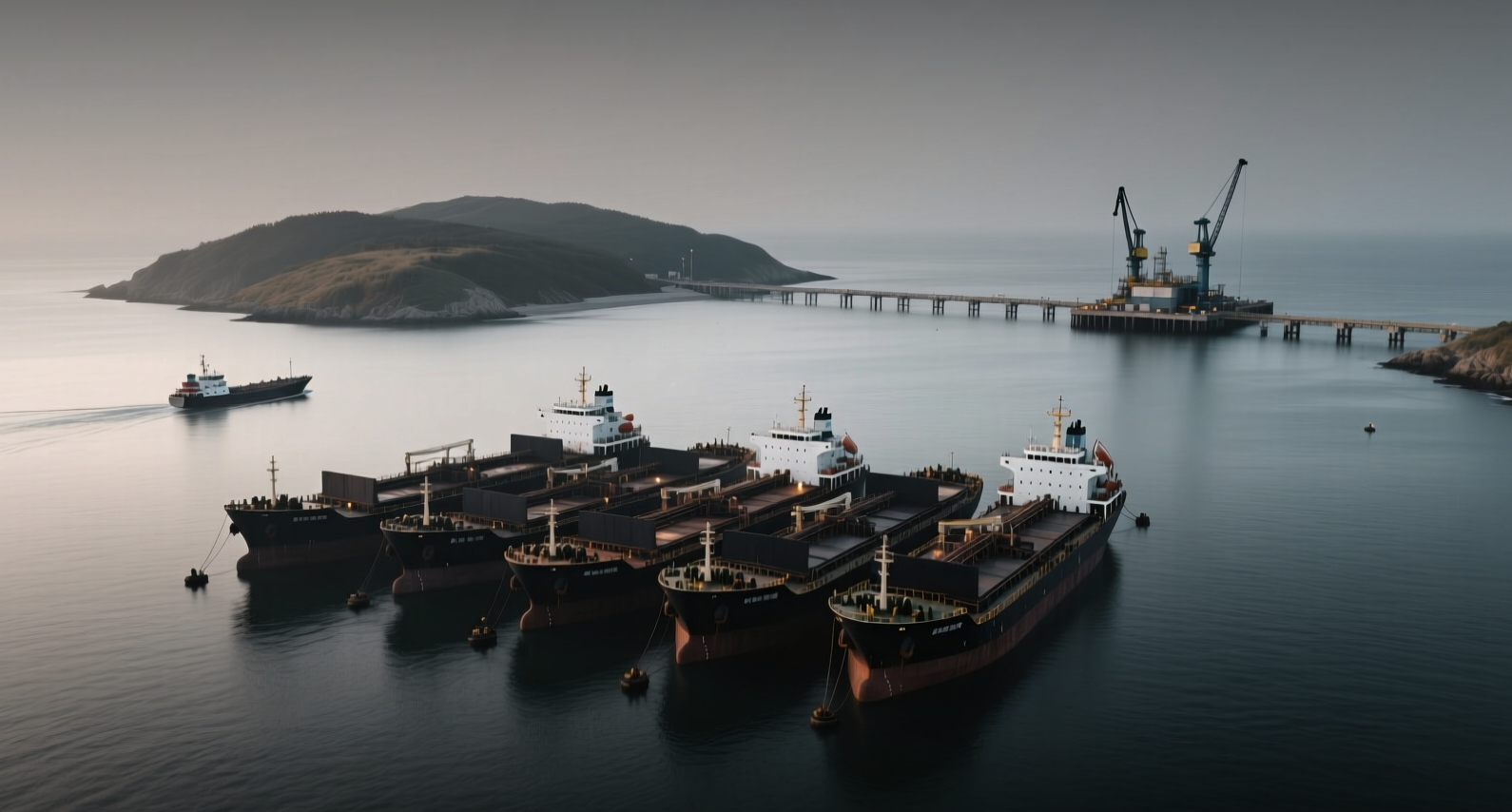
CENTCOM said American forces destroyed one crude carrier and permanently disabled two others after the Iranian barrage, which it said both warships evaded without casualties. The strikes hit near Kharg Island, Iran's main export terminal, off Jask and in the Gulf of Oman, according to the Associated Press.
The exchange marks the sharpest escalation since the US blockade of Iranian oil began in mid-April, and it threatens the Strait of Hormuz, the waterway that carried roughly one-fifth of global crude and liquefied natural gas shipments before the war. Iran's foreign ministry condemned the attacks as a "clear violation" of the UN Charter and said Tehran would respond strongly.
Iran's state-run Islamic Republic News Agency said the Guard's air force fired multiple ballistic missiles at the two vessels, which it accused of enforcing the maritime blockade and disrupting Iranian ships. The agency said both warships sustained losses and were forced to withdraw from the conflict zone — a claim CENTCOM did not confirm, saying no American personnel were injured.
The US response targeted the revenue engine behind the Guard. CENTCOM identified the disabled vessels as the M/T Downy off Kharg Island and the M/T Stark 1 near Jask, and said the M/T Kylo was "completely destroyed" in the Gulf of Oman. Defense Secretary Pete Hegseth wrote on X that Iran's tanker fleet is "defenseless" and that Washington could strike it in the Middle East or the Indo-Pacific.
Kharg Island has historically handled about 90 percent of Iran's crude exports, making any military activity around the anchorage consequential for the world's third-largest OPEC producer. Ship-tracking data cited by Reuters showed nearly 20 Iranian tankers at anchor near Kharg, many fully laden but unable to exit the Gulf because of the blockade.
The confrontation has already hollowed out traffic through the Strait of Hormuz. Only five commodity vessels transited the waterway on a recent Saturday, Reuters reported, versus 31 the previous weekend and more than 130 ships a day before the war began Feb. 28.
Brent crude traded around $96.28 a barrel as the conflict entered its seventh month, with more than 750 US service members wounded and 18 killed, according to the Pentagon. The latest tanker strikes could push prices higher when trading resumes, particularly if Iran retaliates against American forces, commercial shipping or regional oil infrastructure.
The stakes extend beyond Iran's own exports. Saudi Arabia, the United Arab Emirates, Kuwait and Iraq all depend on maritime routes through Hormuz, so a prolonged disruption would affect far more crude than Tehran alone ships. Saturday's direct exchange of fire between Iranian missiles and US warships — following CENTCOM strikes on Guard targets inside Iran on Sept. 1 — raises the odds that the limited blockade war becomes a broader one, with the energy risk premium the first casualty of any further escalation.
This article is for informational purposes only and does not constitute investment advice.
