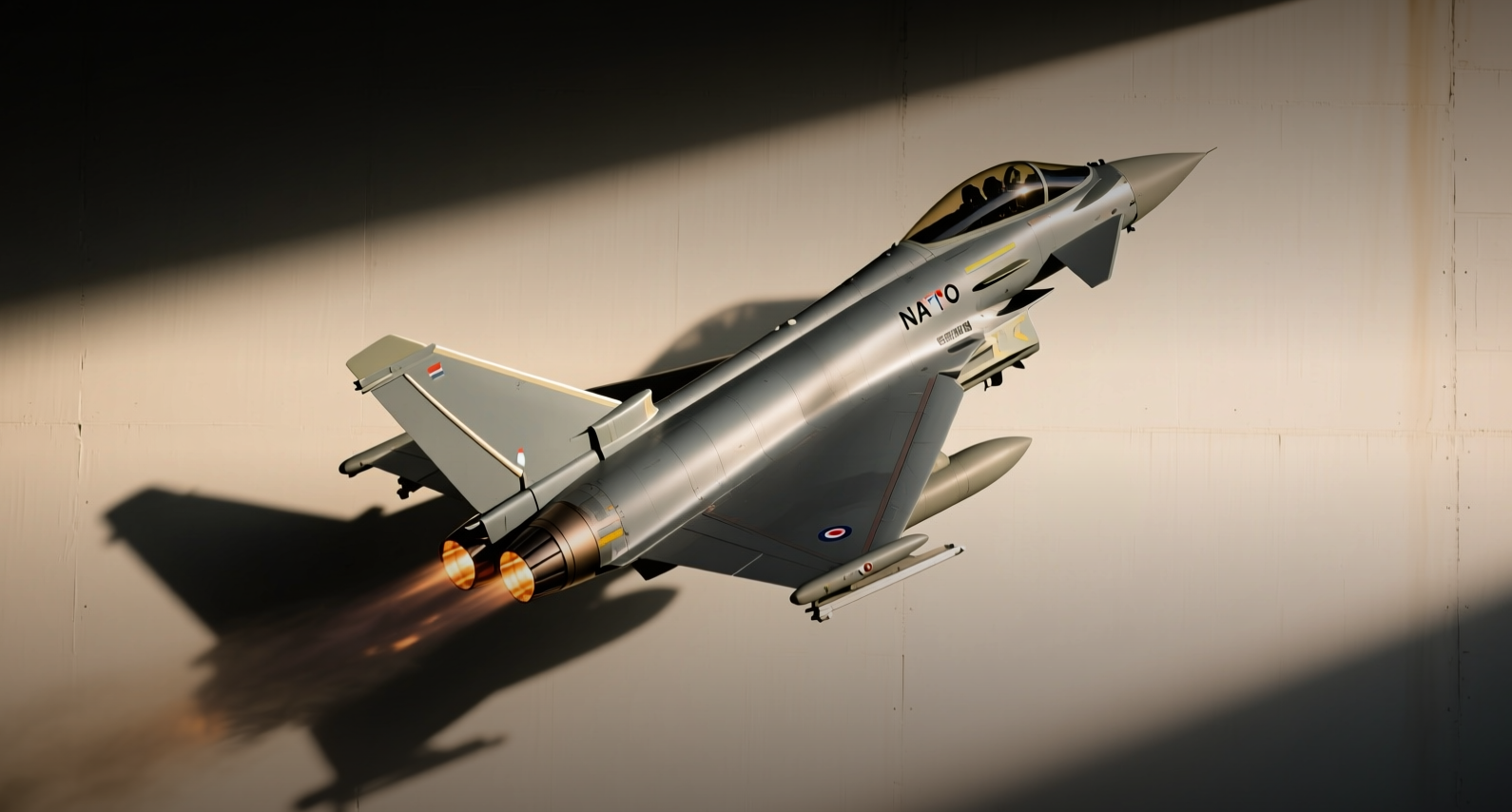
NATO scrambled four jet fighters to shoot down a foreign drone over Latvia on Friday, the latest in a series of airspace incursions that Baltic officials fear could escalate into a false-flag confrontation with Russia.
NATO scrambled four jet fighters to shoot down a foreign drone that entered Latvian airspace early Friday, the latest in a summer of near-weekly incursions that Baltic officials warn could test the alliance's resolve.
"As long as Russia's aggression in Ukraine continues, a recurrence of cases where foreign drones enter or approach Latvian airspace is possible," Latvia's armed forces said in a statement.
Latvia's defense ministry attributed the incursion to "Russian electromagnetic warfare" over the Balvi region, suggesting the drone may have been a Ukrainian strike aircraft diverted off course by GPS spoofing. The drone was not recovered, and an investigation is under way, a NATO spokesman said. Finland imposed temporary aviation and maritime restrictions in the eastern Gulf of Finland on Friday as a precaution.
The incident shows how Russia's electronic warfare campaign against Ukrainian long-range drones is increasingly spilling into NATO territory, forcing the alliance to spend millions scrambling jets and firing missiles at comparatively cheap unmanned aircraft — while Baltic officials worry Moscow could use captured Ukrainian drones to stage a false-flag attack.
NATO said the drone was shot down by an Italian Eurofighter jet, with another Italian and two Turkish F-16s scrambled in response. The air threat alert, which prompted authorities to urge residents in eastern Latvia to seek shelter, was later lifted.
Russian electronic warfare disrupts the satellite navigation systems in Ukrainian drones, forcing them to drift with prevailing winds or default flight paths rather than toward their intended targets inside Russia. Moscow has deployed spoofing and jamming networks across its western military district, according to The Wall Street Journal.
The incursions have become a near-weekly occurrence this summer. In June, a French Rafale fighter shot down a drone over Latvia — the first time NATO's rapid-reaction force downed a stray drone over the country. A Romanian F-16 shot down a drone over Estonia in May, and a drone flying toward Vilnius the following day triggered air-raid alerts in the Lithuanian capital. Romania shot down three drones in July over three days, with the Prosecutor General's Office determining at least one was a Shahed-type used by Russian forces. NATO jets also pursued drones that entered Romanian airspace near the Ukrainian border on Thursday.
False-Flag Fears Drive Baltic Security Push
Baltic officials worry Russia may use captured Ukrainian drones to stage a false-flag attack on NATO infrastructure, prompting enhanced security around power plants and natural-gas facilities. Estonia in March confirmed a Ukrainian drone had struck a power station in the eastern part of the country, close to the Russian port of Ust-Luga, which Ukraine was attacking at the time. Ukraine apologized to Finland in March for two stray drones that crashed in the southeastern part of the country, blaming electronic signal interference by Russia.
U.S. intelligence has concluded Russia likely sent an explosive-laden drone discovered near a Ukrainian cargo plane at an airport in eastern Germany earlier this month. Germany's interior minister called the incident "a new level of danger." Germany's top military officer, Gen. Carsten Breuer, told The Wall Street Journal that Russia was waging an intensifying gray-zone campaign aimed at destabilizing the continent's governments and institutions.
Defense Budgets Face Pressure
Scrambling jets or launching missiles is an expensive way to deal with comparatively cheap mass-produced drones, testing NATO's resilience and its coffers. Latvia is considering acquiring Embraer A-29 Super Tucano light attack aircraft, in part to provide a less expensive way of intercepting slow-moving drones than using frontline NATO fighters. Repeated incursions are likely to pressure NATO members to increase defense spending, a dynamic that could support European defense contractors and aerospace stocks.
NATO first shot down Russian drones over a member state in September last year, when Poland said its airspace had been breached 19 times in one night, leading authorities to close major airports. A Russian cruise missile crashed in eastern Poland in July, likely targeting Ukraine roughly 60 miles away.
U.S. intelligence assessments say Russian President Vladimir Putin could seek to test NATO's resolve with a limited attack on one of its members in the coming years, according to The Wall Street Journal. NATO allies gathered Wednesday to discuss the recent drone incursions, reiterating that "Russia bears full responsibility for the airspace violations, which are dangerous and unacceptable."
This article is for informational purposes only and does not constitute investment advice.