

Key Takeaways:
- Shenji shipped over 300,000 NX9031X chips across NIO and Onvo models
- The subsidiary raised nearly 3 billion yuan ($440 million) since June 2025
- New NX9031U chip delivers 800 TOPS for embodied intelligence applications
Key Takeaways:
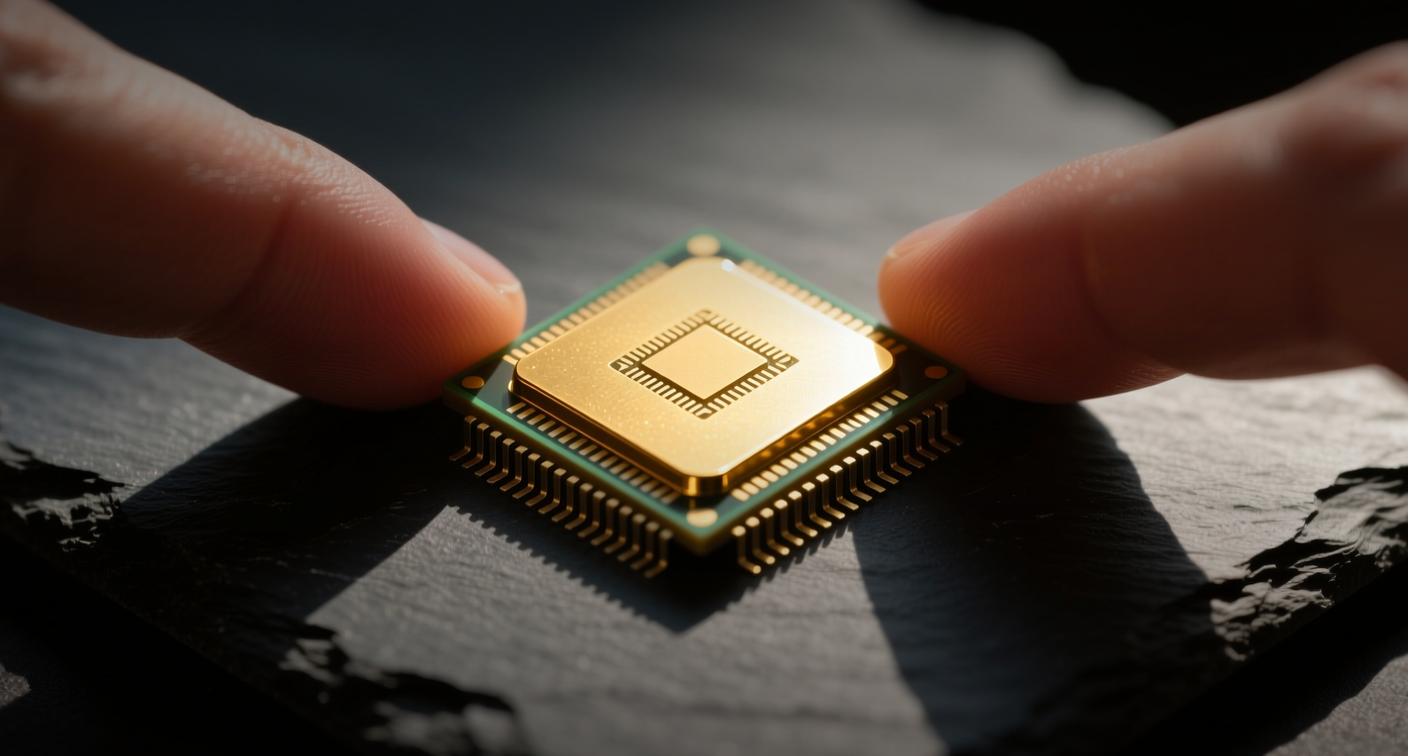
NIO's chip-making arm Shenji has shipped over 300,000 units of its autonomous driving chip and raised nearly $440 million, positioning the EV maker as a contender in three AI fields beyond cars.
The subsidiary, formally known as GeniTech Co Ltd, made its first independent appearance at the World Artificial Intelligence Conference 2026 in Shanghai, displaying chips spanning autonomous driving, embodied intelligence and agent inference.
"We are the only company in China shipping chips in all three major general-purpose AI fields," Ma Lin, NIO's vice president of branding and communications, said on Weibo.
Shenji's lineup includes the NX9031X for assisted driving — already deployed across all NIO and Onvo models with cumulative shipments exceeding 300,000 units — the NX9031U for embodied intelligence, and the NX9031C for agent inference. The NX9031U, built on a 5-nanometer automotive-grade process, delivers up to 800 TOPS of equivalent computing power and uses air cooling, targeting robotics, intelligent computing and advanced manufacturing. The high-end NX9031 chip, unveiled in December 2023 and taped out in July 2024, contains more than 50 billion transistors on a 5nm node. NIO has said one NX9031 delivers computing power equivalent to four Nvidia Orin chips, which powered the company's earlier NT 2.0 platform models with a combined 1,016 TOPS.
Beyond chips, Shenji launched the Ruidong embodied intelligence development platform, powered by the NX9031U, and a distributed intelligent agent platform. The company said it will transfer capabilities from vehicle perception, real-time control and functional safety to humanoid robots, driverless logistics vehicles and high-computing-power terminals.
Shenji has completed nearly 3 billion yuan ($440 million) in financing since its establishment in June 2025, giving it a post-investment valuation of about 8.27 billion yuan. A NIO subsidiary continues to hold a 62.7 percent controlling stake, and NIO Inc continues to consolidate its financial statements. The chip business has been one of the most expensive items in NIO's research and development spending — founder William Li once said the NX9031's development cost ran into billions of yuan, comparable to building 1,500 battery swap stations.
For NIO, extending chip capabilities beyond its own vehicles improves the commercialization potential of its costly semiconductor program. Shenji's expansion into embodied intelligence and agent inference opens addressable markets far larger than automotive alone, though the NX9031U's 800 TOPS claim has not been independently verified against comparable products from Nvidia or Qualcomm. NIO shares, listed on the New York Stock Exchange, have yet to price in the subsidiary's standalone value as an AI chip supplier.
This article is for informational purposes only and does not constitute investment advice.
