


Key Takeaways: Western Digital's AI storage focus and stronger financial footing give it an edge over Super Micro Computer as both companies target the booming AI infrastructure market.
Key Takeaways: Western Digital's AI storage focus and stronger financial footing give it an edge over Super Micro Computer as both companies target the booming AI infrastructure market.
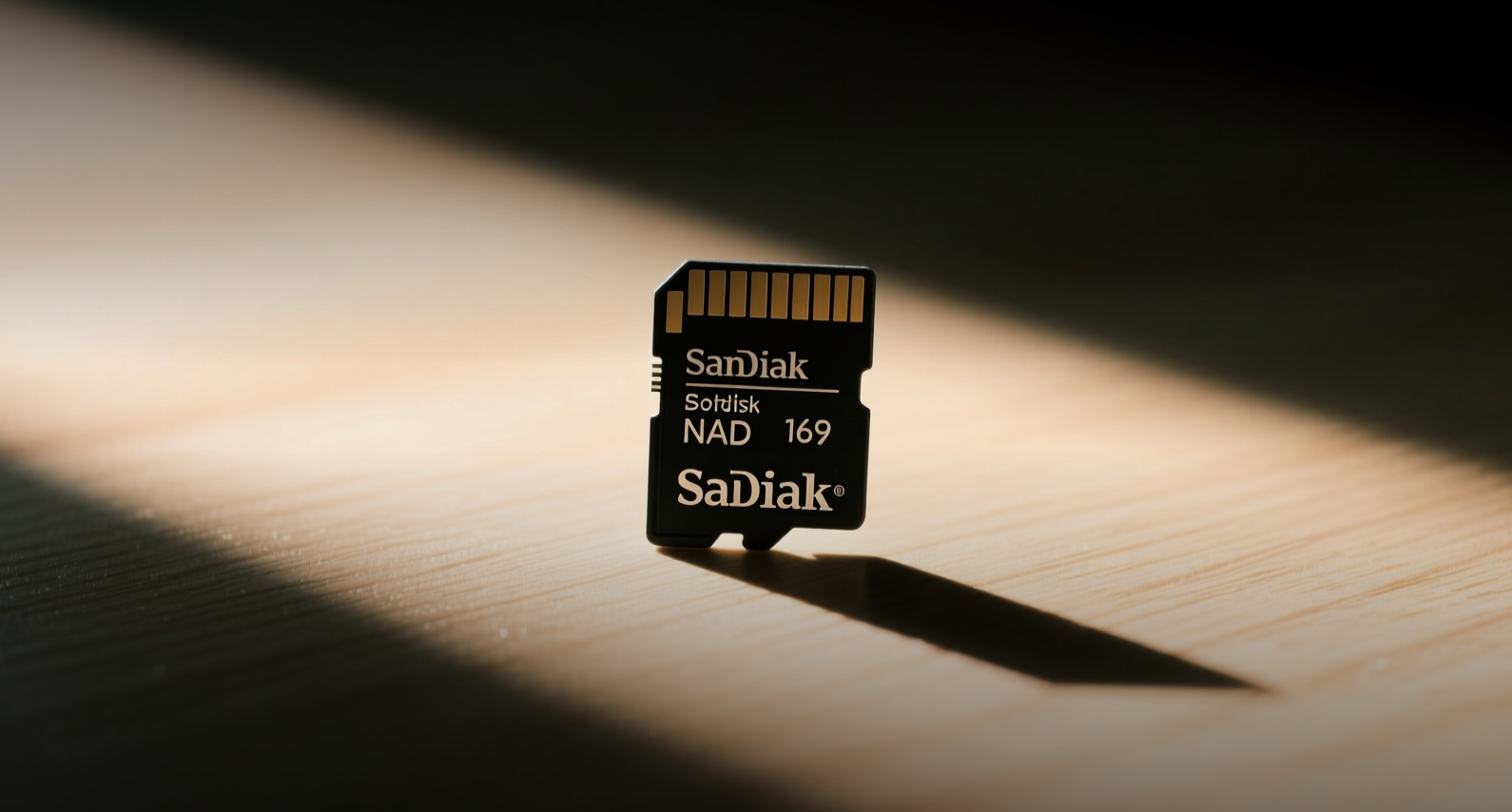
Western Digital Corp. has emerged as the stronger bet against Super Micro Computer Inc. in the AI hardware race, with its NAND flash storage business riding an 800% surge in memory demand from hyperscale data centers.
"Western Digital's vertical integration in NAND flash gives it pricing power that Super Micro, as a server assembler, simply doesn't have," Bernstein analyst Mark Li said.
Western Digital shares have rallied 800% over the past year, though they've pulled back 26.5% in the last 30 days to $548.39. The company is in renewed merger discussions with Kioxia Holdings to combine their NAND flash assets through either a share-based deal or a spin-off. Its separated flash unit, SanDisk, reported third-quarter revenue of $5.95 billion with non-GAAP gross margins expanding to 78.4% from 51.1%, showing the pricing power in the NAND market.
The divergence matters because AI storage demand shows no signs of slowing. OpenAI alone is buying up to 5 exabytes of data storage, and seven of every 10 memory chips now go to Microsoft Corp., Alphabet Inc., Amazon.com Inc. and other hyperscalers building AI data centers. Western Digital's long-term supply agreements, including floor prices of roughly $0.29 per gigabyte, provide earnings visibility that Super Micro's build-to-order model cannot match.
Why Storage Beats Assembly in the AI Supply Chain
The structural advantage for Western Digital lies in the NAND flash shortage that analysts expect to last two to three years or longer. Morgan Stanley maintains an Outperform rating on SanDisk, citing a persistent memory shortage with "no quick fix" due to the years required to build new fabrication clean rooms. SanDisk has locked in $42 billion in contract revenues, pre-selling more than a third of its fiscal 2027 chip production.
Super Micro, by contrast, operates in the lower-margin server assembly business where competition from Dell Technologies Inc., Hewlett Packard Enterprise Co. and Lenovo Group Ltd. keeps pricing pressure constant. While Super Micro has benefited from AI server demand, its gross margins typically run in the 10% to 15% range — a fraction of SanDisk's 78.4%.
Valuation and the Risk of Mean Reversion
The most followed fair value estimate for Western Digital, according to analyst mitchell_lawler, anchors at $329.76 — implying the stock is 66.3% overvalued at current levels. The bear case argues that record NAND margins invite new supply from Samsung Electronics Co., SK Hynix Inc. and Micron Technology Inc., which could compress pricing over the next 18 to 24 months.
SanDisk's forward PEG ratio of 0.11 sits at a 90% discount to the sector median of 1.31, reflecting deep market skepticism about the sustainability of hyper-growth beyond the current chip shortage. Wall Street remains bullish, with Bernstein raising its SanDisk price target to $3,000 and Susquehanna to $3,250, but the wide gap between current prices and fair value estimates points to elevated volatility ahead.
For investors weighing the two AI hardware plays, Western Digital's combination of vertical integration, long-term supply contracts and exposure to the structural NAND shortage offers a clearer path to sustained earnings growth than Super Micro's assembly-dependent model. The risk is that memory pricing normalizes faster than expected — but with fabrication capacity years away, the near-term momentum favors storage over servers.
This article is for informational purposes only and does not constitute investment advice.
