


US retailers are cutting product variety to concentrate on bestsellers as tariff and freight costs erode margins.
US retailers are cutting product variety to concentrate on bestsellers as tariff and freight costs erode margins.
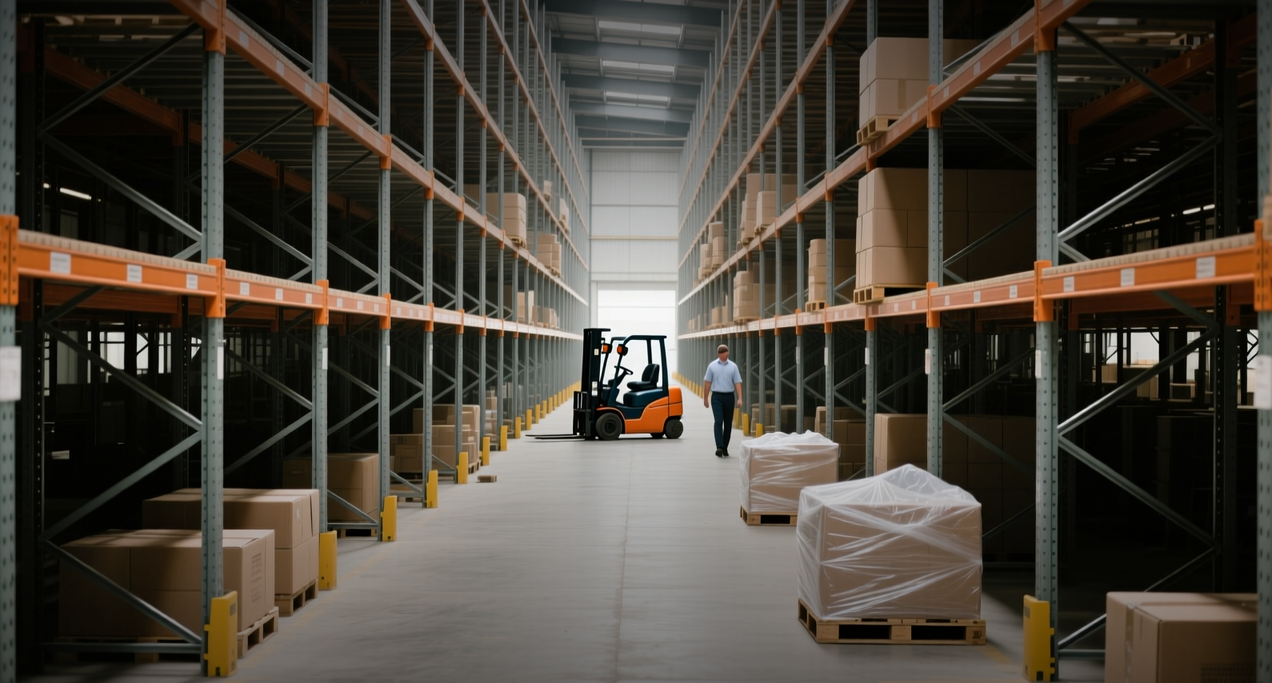
US retailers are slimming product lineups to focus on bestsellers as tariff and freight costs erode margins, with Under Armour and Helen of Troy among companies trimming SKUs.
"Retailers are catching on to needing to have more diverse and agile supply chains," said Bryan Eshelman, managing director in the retail practice at consulting firm AlixPartners.
The cost pressure is acute. Average spot rates from the Far East to the US East Coast surged 234 percent year over year to about $7,600 per 40-foot equivalent unit as Houthi attacks forced carriers to divert vessels around the Cape of Good Hope, adding 10 to 14 days of transit time. Some carriers are demanding $1,500 to $3,000 more per container, a 38 to 73 percent increase for directly affected cargo.
The SKU-reduction push is a structural response to a cost environment that shows no sign of easing, and it carries a trade-off: leaner assortments improve working capital and margin profiles but shrink the product discovery that drives discretionary demand.
Under Armour and Helen of Troy, the consumer-products maker, are paring back assortments to concentrate on proven sellers, according to the Wall Street Journal. The moves mark a shift from the variety-led merchandising that defined the post-pandemic retail boom, when brands chased share with ever-wider catalogs.
The simplification is a direct cost-management response. Every SKU a retailer carries brings freight, warehousing, and markdown risk, and with freight bills rising, the economics of a long tail of slow-moving products have deteriorated. Retailers selling lower-margin discretionary goods find it increasingly difficult to absorb the additional transportation costs without passing them on to consumers, a price transfer that dampens demand and leaves bloated safety stock.
The tariff calculus has been complicated by the refunds retailers began receiving in the second quarter after the Supreme Court ruled in February that the International Emergency Economic Powers Act did not authorize President Donald Trump to impose the duties. Home Depot received $730 million in refunds and used roughly $685 million to reduce the cost of goods sold, lifting gross margin 0.3 percent. Walmart is eligible for about $2.9 billion and plans to use the funds to lower prices. TJX applied $331 million to its cost of sales.
Other retailers took a different path. Lowe's received about $80 million, giving it an 11-cent boost to earnings per share, and said it would not use the tariff dollars to cut prices. Target booked a $752 million boost to net earnings and a $994 million pretax benefit to gross margin and operating income. Kohl's put $100 million of its refunds into gross margin and plans to use the rest to deepen inventory.
Eshelman said the divergence reflects each retailer's price position in the market, with value-driven operators more likely to apply funds to keep prices lower and "proclaim that to the marketplace." The one-time boosts also set a higher bar for next year's comparisons. "It's an unfair positive comparison to last year's quarter, and it's going to be an unfair negative comparison to next year's quarter," he said.
For the sector, the SKU-reduction trend is a bet that concentration on bestsellers will protect margins better than breadth. But it also reflects softer discretionary demand, with retail sales growth in major markets like China slowing to 3 percent year over year as inflation squeezes middle-class budgets. The last time retailers aggressively cut assortments was during the pandemic-era inventory glut, when bloated stock forced margin-destroying markdowns; this round is preemptive rather than reactive.
The forward question is whether the simplification is durable. If freight rates ease and tariff policy stabilizes, retailers may rebuild variety to chase growth. If costs stay elevated, the leaner model becomes the new baseline — and the winners will be those that paired SKU cuts with the supply-chain agility Eshelman described.
This article is for informational purposes only and does not constitute investment advice.
